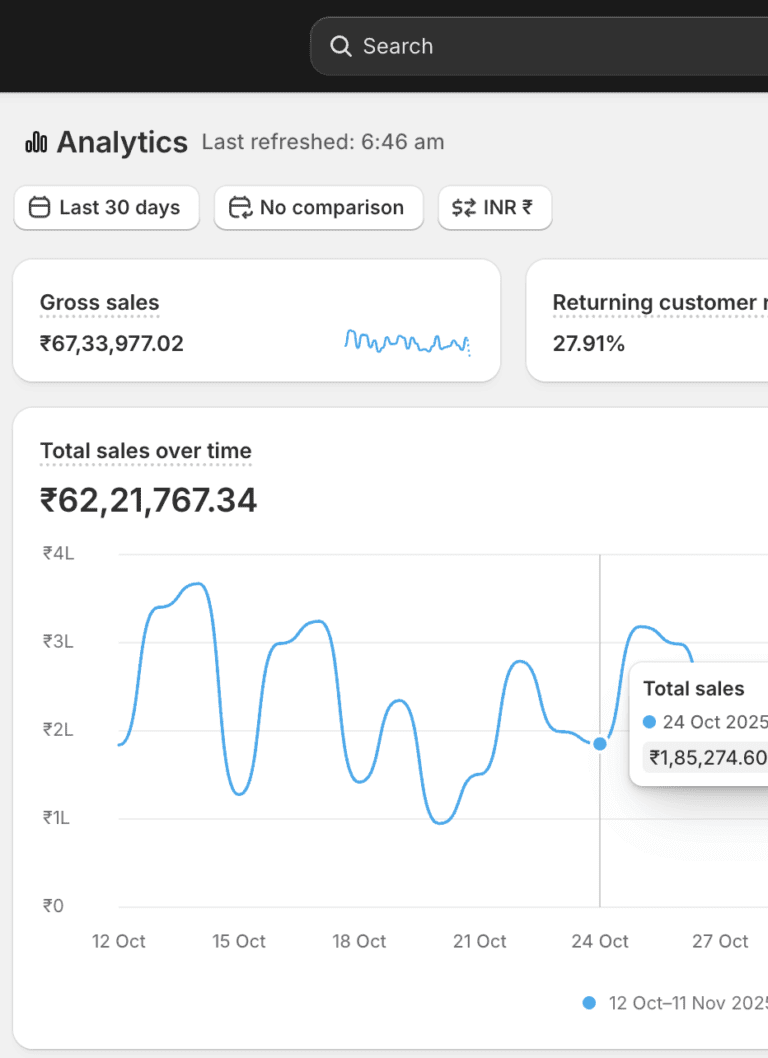
The digital commerce landscape in 2026 demands more than just an attractive website. Modern ecommerce web design and development requires a strategic approach that balances aesthetic appeal with technical performance, user experience optimization, and conversion-focused functionality. Businesses entering the online marketplace face critical decisions about platform selection, design architecture, and development methodologies that directly impact their revenue potential and long-term growth. Understanding the fundamental elements that separate high-performing ecommerce stores from underperforming ones enables brands to make informed investments in their digital infrastructure.
Strategic Foundation for Ecommerce Development
Building a successful online store begins with establishing clear business objectives and technical requirements. The foundation of effective ecommerce web design and development rests on understanding your target audience, competitive landscape, and unique value proposition before writing a single line of code.
Defining Business Requirements
Every ecommerce project requires comprehensive planning that aligns technical capabilities with business goals. Start by identifying your core product categories, anticipated traffic volumes, and essential features that support your sales process. Consider whether you need multi-currency support, international shipping capabilities, or complex product configurations that might influence platform selection.
Essential planning considerations include:
- Target monthly traffic and transaction volumes
- Product catalog size and complexity
- Integration requirements with existing business systems
- Budget allocation for initial development and ongoing maintenance
- Timeline constraints and phased rollout strategies
- Team resources available for platform management
Your business requirements directly influence every subsequent decision in the development process. A direct-to-consumer brand launching with 50 products has vastly different needs compared to an established retailer migrating 10,000 SKUs from legacy systems.
Platform Selection Criteria
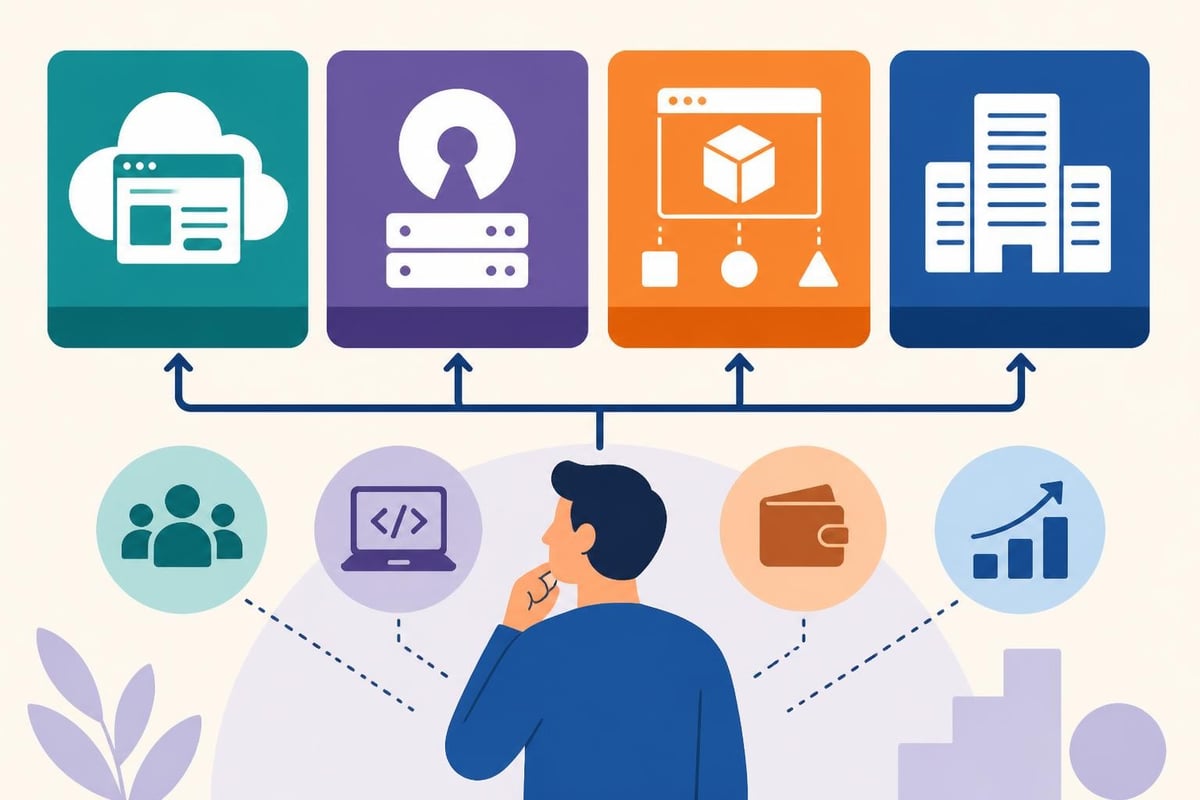
Choosing the right ecommerce platform represents one of the most consequential decisions in your digital commerce journey. The best ecommerce platforms of 2026 offer varying levels of customization, scalability, and built-in features that cater to different business models.
| Platform Type | Best For | Key Advantages | Limitations |
|---|---|---|---|
| SaaS Solutions | Growing D2C brands | Quick launch, managed infrastructure, regular updates | Less flexibility for unique workflows |
| Open Source | Large catalogs, custom requirements | Complete control, unlimited customization | Higher development costs, maintenance responsibility |
| Headless Commerce | Omnichannel experiences | Maximum flexibility, performance optimization | Complex architecture, higher technical expertise needed |
| Enterprise Platforms | High-volume retailers | Advanced features, dedicated support | Significant investment, longer implementation |
Shopify has emerged as the dominant solution for brands prioritizing speed-to-market and conversion optimization. The platform's ecosystem of apps, themes, and development tools enables rapid deployment while maintaining professional standards. For established brands requiring enterprise-level capabilities, Shopify Plus provides advanced features including automation workflows, dedicated infrastructure, and priority support.
Design Principles for High-Converting Stores
Visual design and user experience form the critical interface between your brand and potential customers. Modern ecommerce web design and development prioritizes conversion optimization through strategic layout decisions, intuitive navigation, and persuasive visual hierarchies.
User Experience Architecture
Successful ecommerce design guides visitors effortlessly from discovery to purchase. Your site architecture should reduce friction at every touchpoint while providing clear pathways to conversion. Navigation structures must balance comprehensive product access with simplicity, preventing choice paralysis while enabling efficient browsing.
Core UX principles for ecommerce include:
- Maximum three-click rule for reaching any product
- Persistent shopping cart access across all pages
- Clear category hierarchies that match customer mental models
- Prominent search functionality with intelligent autocomplete
- Mobile-first responsive design that adapts seamlessly
- Strategic placement of trust signals and social proof
Product pages deserve particular attention as they serve as the final decision point before purchase. High-quality imagery, detailed specifications, customer reviews, and clear calls-to-action combine to address common objections and build purchase confidence.
Visual Design and Brand Expression
Your ecommerce store serves as your digital storefront, communicating brand values and positioning through every visual element. Effective design balances aesthetic appeal with functional clarity, ensuring that beauty never compromises usability.
Color psychology plays a significant role in ecommerce conversion rates. Primary actions like "Add to Cart" buttons benefit from high-contrast colors that draw attention without clashing with your overall brand palette. Typography choices affect readability and brand perception, with clean sans-serif fonts generally performing better for product information while serif fonts can enhance luxury positioning.
Mobile Commerce Optimization
Mobile devices account for over 70% of ecommerce traffic in 2026, making mobile optimization non-negotiable for commercial success. Responsive design represents the baseline expectation, but truly effective mobile commerce requires thoughtful adaptation of features and interfaces for smaller screens and touch interactions.
Touch targets must meet minimum size requirements to prevent accidental clicks. Forms should leverage mobile-specific input types and minimize required fields. Product images need to remain clear and zoomable on smaller displays. Checkout processes require streamlining to accommodate limited screen real estate while maintaining security and clarity.
Technical Development Fundamentals
The technical architecture underlying your ecommerce store determines its performance, scalability, and maintenance requirements. Professional ecommerce web design and development incorporates best practices in coding standards, security protocols, and performance optimization from the project's inception.
Performance Optimization Strategies
Page load speed directly impacts conversion rates, with research consistently showing that each second of delay reduces conversions by approximately 7%. Comprehensive ecommerce website development requires systematic attention to performance optimization across multiple dimensions.
Critical performance optimization techniques:
- Image Optimization: Compress product images without quality loss, implement lazy loading, use next-generation formats like WebP
- Code Minification: Reduce CSS, JavaScript, and HTML file sizes through minification and bundling
- Caching Strategies: Implement browser caching, CDN distribution, and server-side caching layers
- Database Optimization: Index frequently queried fields, optimize database queries, implement query caching
- Third-Party Script Management: Audit and minimize external scripts, load non-critical scripts asynchronously
Testing performance across various devices and network conditions ensures consistent experiences for all visitors. Tools like Google PageSpeed Insights and WebPageTest provide actionable recommendations for improvement.
Security and Compliance Requirements
Ecommerce stores handle sensitive customer data and financial transactions, making security paramount. PCI DSS compliance represents the minimum standard for processing credit card payments, but comprehensive security extends far beyond payment processing.
SSL certificates encrypt data transmission between browsers and servers, protecting customer information from interception. Regular security audits identify vulnerabilities before malicious actors can exploit them. Two-factor authentication for administrative access prevents unauthorized store modifications. Regular backups ensure business continuity in case of security incidents or data loss.
Privacy regulations like GDPR and CCPA impose additional requirements for data collection, storage, and customer consent management. Your ecommerce platform must provide mechanisms for customers to access, modify, and delete their personal data upon request.

Conversion Rate Optimization Strategies
Converting visitors into customers represents the ultimate measure of ecommerce success. Strategic ecommerce web design and development incorporates conversion rate optimization (CRO) principles throughout the design and development process rather than treating optimization as an afterthought.
Checkout Process Optimization
The checkout process presents the highest-stakes interaction in the customer journey. Cart abandonment rates average 70% across ecommerce stores, with friction in the checkout process representing a primary cause. Streamlining this critical pathway requires eliminating unnecessary steps while maintaining essential security and information collection.
Guest checkout options reduce friction for first-time buyers hesitant to create accounts. Progress indicators show customers how many steps remain, reducing abandonment from uncertainty. Auto-fill capabilities and address validation prevent form errors that frustrate customers. Multiple payment options accommodate diverse customer preferences, from traditional credit cards to digital wallets and buy-now-pay-later services.
Trust Building Elements
Customers purchasing from unfamiliar brands require reassurance that their transaction will proceed safely and that products will meet expectations. Strategic placement of trust signals throughout the shopping experience addresses these concerns at critical decision points.
| Trust Element | Optimal Placement | Conversion Impact |
|---|---|---|
| Security badges | Checkout page, footer | 15-30% increase |
| Customer reviews | Product pages, homepage | 20-40% increase |
| Money-back guarantee | Product pages, cart | 10-25% increase |
| Shipping information | Product pages, header | 15-20% increase |
| Contact information | Header, footer | 5-15% increase |
Social proof through customer reviews, testimonials, and user-generated content leverages psychological principles that influence purchasing decisions. Displaying real customer experiences builds credibility more effectively than brand messaging alone.
Personalization and Recommendations
Modern ecommerce platforms enable sophisticated personalization that adapts the shopping experience to individual customer preferences and behaviors. Product recommendation engines analyze browsing history, purchase patterns, and similar customer behaviors to suggest relevant items that increase average order values.
Dynamic content blocks can display different messaging, products, or promotions based on customer segments, traffic sources, or previous interactions. Email captures at strategic points enable remarketing campaigns that bring visitors back to complete abandoned purchases or discover new products aligned with their interests.
Integration and Ecosystem Development
Successful ecommerce operations extend beyond the website itself, requiring seamless integration with business systems, marketing tools, and operational platforms. Comprehensive ecommerce web design and development accounts for these integrations during the planning phase to ensure smooth data flow across your technology stack.
Essential Third-Party Integrations
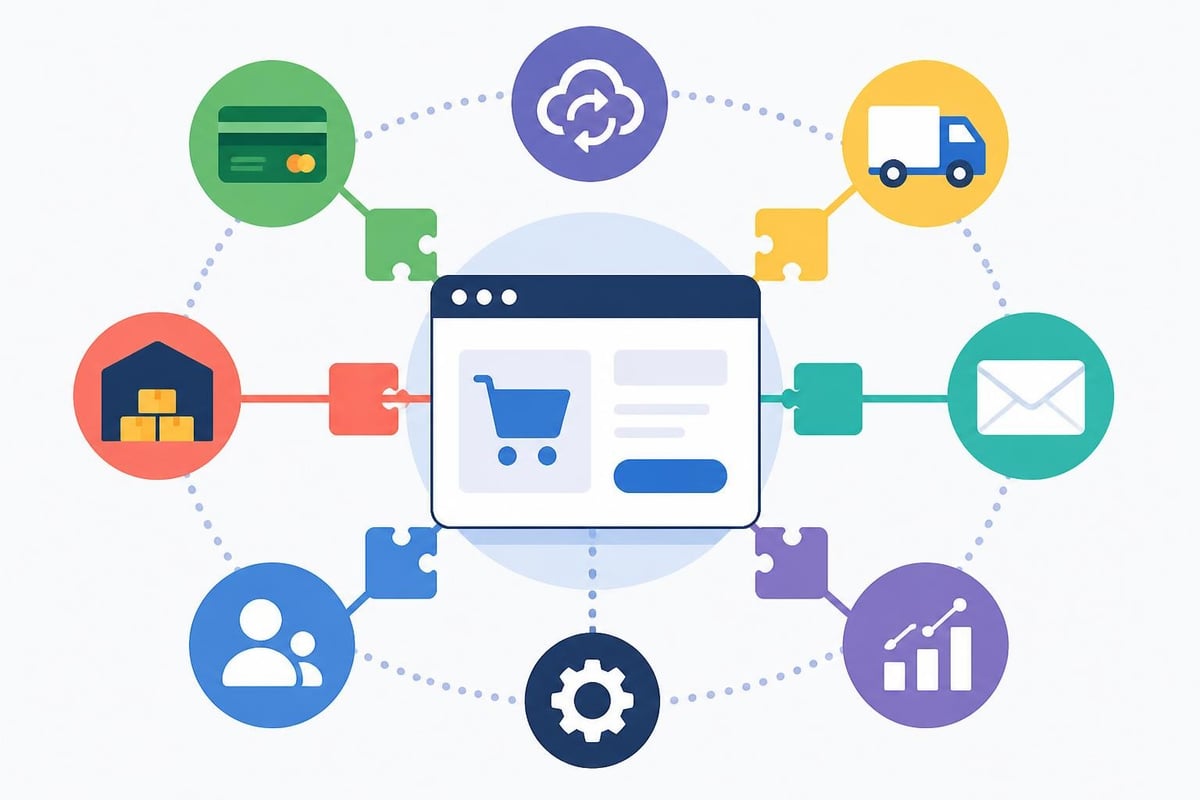
Modern ecommerce stores function as central hubs connected to specialized services that handle specific business functions. Inventory management systems synchronize stock levels across sales channels, preventing overselling while maintaining accurate product availability. Shipping calculators provide real-time rates from multiple carriers, enabling customers to choose their preferred delivery method.
Email marketing platforms capture customer data and purchase history to enable targeted campaigns. Accounting software receives transaction data for financial reporting and tax compliance. Customer relationship management (CRM) systems consolidate customer interactions across touchpoints, enabling personalized service and marketing.
Priority integration categories include:
- Payment gateways and fraud prevention services
- Shipping carriers and fulfillment platforms
- Email marketing and marketing automation tools
- Analytics and conversion tracking systems
- Customer support and helpdesk solutions
- Inventory and warehouse management systems
API quality and documentation determine integration complexity and reliability. Platforms with robust API ecosystems and extensive developer communities reduce integration challenges and ongoing maintenance requirements.
Marketing Technology Stack
Driving qualified traffic to your ecommerce store requires coordination between your website and marketing platforms. Pixel tracking from advertising platforms enables retargeting campaigns and conversion attribution. Social media integrations facilitate product tagging and shoppable posts that reduce friction in the path to purchase.
For brands ready to scale their online presence, partnering with specialists in Shopify Website Development ensures that technical implementation supports sophisticated marketing strategies while maintaining optimal site performance and conversion rates.
Scalability and Growth Planning
Building for current needs while accommodating future growth represents a fundamental challenge in ecommerce development. Strategic ecommerce web design and development incorporates scalability considerations that prevent costly platform migrations or complete rebuilds as your business expands.
Infrastructure Scalability
Traffic spikes during promotional periods or seasonal peaks can overwhelm inadequately provisioned infrastructure, resulting in slow page loads or complete outages during your highest-revenue opportunities. Cloud-based hosting solutions provide elastic scalability that automatically allocates additional resources during demand surges.
Database architecture decisions made during initial development determine how efficiently your store handles growing product catalogs and customer bases. Proper indexing, query optimization, and caching strategies maintain performance as data volumes increase. Content delivery networks (CDNs) distribute static assets geographically, ensuring fast load times for customers regardless of their location.
Feature Expansion Planning
Your initial ecommerce launch should focus on core functionality that enables transactions and provides solid user experience. However, planning for feature additions prevents architectural decisions that limit future capabilities. Modular development approaches allow adding functionality without disrupting existing systems.
Consider how your platform will accommodate future needs like:
- International expansion with multi-currency and multi-language support
- Wholesale or B2B sales channels alongside direct-to-consumer operations
- Subscription or membership programs for recurring revenue
- Advanced product customization and configuration tools
- Augmented reality features for virtual product visualization
- Voice commerce integration for smart speaker shopping
Maintenance and Continuous Improvement
Launching your ecommerce store marks the beginning rather than the conclusion of your development journey. Ongoing maintenance, optimization, and feature enhancement ensure your store remains competitive and continues meeting evolving customer expectations.
Regular Maintenance Requirements
Security updates, platform patches, and compatibility fixes require consistent attention to prevent vulnerabilities and maintain functionality. Theme and plugin updates introduce new features and performance improvements but require testing to ensure compatibility with your specific configuration.
Ongoing maintenance activities include:
- Security monitoring and patch application
- Performance testing and optimization refinement
- Broken link identification and correction
- Product data quality audits and corrections
- Backup verification and disaster recovery testing
- Analytics review and conversion funnel analysis
Establishing a maintenance schedule prevents neglect that leads to security vulnerabilities, degraded performance, or broken functionality that damages customer trust and revenue.
A/B Testing and Optimization
Continuous improvement through systematic testing separates high-performing stores from stagnant ones. A/B testing enables data-driven decisions about design changes, messaging variations, and feature additions by comparing performance between alternatives.
Test elements systematically rather than making multiple changes simultaneously. Product page layouts, call-to-action button colors, headline copy, pricing displays, and checkout flows all represent optimization opportunities that can significantly impact conversion rates. Statistical significance requires adequate sample sizes, so prioritize high-traffic pages for testing initiatives.
Emerging Trends and Future Considerations
The ecommerce landscape continues evolving rapidly, with new technologies and customer expectations reshaping what constitutes competitive ecommerce web design and development. Staying informed about emerging trends enables strategic investments in capabilities that provide competitive advantages.
Artificial Intelligence Applications
AI-powered features are transitioning from novelty to expectation across ecommerce experiences. Chatbots provide instant customer service, answering common questions and guiding product selection. Visual search enables customers to upload images and find similar products in your catalog. Predictive analytics forecast demand patterns, informing inventory decisions and promotional planning.
Current ecommerce development trends highlight the growing importance of AI integration, from personalized product recommendations to dynamic pricing optimization based on demand signals and competitive intelligence.
Sustainability and Ethical Commerce
Consumer awareness of environmental and social impact influences purchasing decisions increasingly in 2026. Ecommerce platforms need capabilities to communicate sustainability initiatives, carbon-neutral shipping options, and ethical sourcing practices. Transparency features that detail product origins, manufacturing processes, and environmental impact appeal to values-driven customers.
Voice and Conversational Commerce
Smart speakers and voice assistants represent growing commerce channels requiring optimization beyond traditional web interfaces. Voice-optimized product descriptions, conversational search capabilities, and voice-activated reordering functionality extend your commerce presence into emerging interaction paradigms.
Analytics and Data-Driven Decision Making
Understanding customer behavior, traffic sources, and conversion patterns enables informed optimization decisions. Comprehensive ecommerce web design and development includes robust analytics implementation that captures actionable insights about store performance.
Essential Metrics and KPIs
Monitoring the right metrics focuses optimization efforts on changes that impact business outcomes. Conversion rate, average order value, customer lifetime value, and cart abandonment rate represent fundamental ecommerce KPIs that reflect overall store health.
Critical ecommerce metrics to track:
- Traffic sources and channel performance
- Product page engagement and bounce rates
- Add-to-cart and checkout initiation rates
- Payment completion rates and abandonment points
- Customer acquisition costs by marketing channel
- Return on ad spend for paid campaigns
- Product performance and category analytics
- Search query analysis and result effectiveness
Segmenting metrics by customer type, traffic source, device type, and geographic location reveals optimization opportunities that aggregate data might obscure. New versus returning customer behavior often differs significantly, requiring different optimization strategies.
Attribution and Revenue Tracking
Understanding which marketing efforts drive revenue enables efficient budget allocation and channel optimization. Multi-touch attribution models credit multiple customer touchpoints rather than assigning all credit to the final interaction before purchase. This more accurately reflects the customer journey through awareness, consideration, and decision stages.
Ecommerce platforms must correctly implement transaction tracking across all analytics and advertising platforms to enable accurate reporting. Revenue data flows to advertising platforms to optimize campaigns for actual sales rather than clicks or traffic alone.
Team Structure and Development Resources
Successfully executing an ecommerce project requires assembling the right combination of skills and expertise. Whether building an in-house team or partnering with specialists, understanding required capabilities ensures comprehensive project coverage.
Required Skill Sets
Ecommerce development encompasses multiple disciplines that must work cohesively. Front-end developers focus on user interface implementation, ensuring designs translate accurately to functional code. Back-end developers handle server-side logic, database interactions, and integration development. UX designers create wireframes and optimize user flows based on research and testing.
Key roles in ecommerce development:
| Role | Primary Responsibilities | Critical Skills |
|---|---|---|
| UX Designer | User research, wireframing, flow optimization | User psychology, prototyping tools, testing |
| UI Designer | Visual design, brand expression, asset creation | Design software, typography, color theory |
| Front-End Developer | Interface implementation, responsive design | HTML, CSS, JavaScript, frameworks |
| Back-End Developer | Server logic, integrations, database design | Programming languages, APIs, databases |
| Project Manager | Timeline coordination, stakeholder communication | Organization, communication, methodology |
| QA Specialist | Testing, bug identification, quality assurance | Detail orientation, testing tools, documentation |
Build Versus Partner Decisions
Businesses face strategic decisions about developing ecommerce capabilities internally versus partnering with specialized agencies. Internal development provides maximum control and platform knowledge but requires significant hiring, training, and ongoing resource commitment. Agency partnerships provide immediate access to experienced teams and established processes but require clear communication and alignment on objectives.
Hybrid approaches leverage agency expertise for initial development and strategic optimization while building internal capabilities for day-to-day management and content updates. This balances access to specialized knowledge with sustainable long-term operations.
Effective ecommerce web design and development combines strategic planning, technical expertise, and continuous optimization to create stores that attract, engage, and convert customers. Success requires attention to platform selection, performance optimization, security implementation, and conversion-focused design principles that work together to support business growth. Whether you're launching your first online store or scaling an established brand, partnering with specialists who understand the nuances of high-converting ecommerce experiences accelerates your path to success. WebzPlot specializes in creating CRO-optimized Shopify stores that combine compelling design with conversion-focused development, helping D2C brands and established retailers achieve their online revenue goals through strategic ecommerce solutions.