The Indian eCommerce market is experiencing unprecedented growth, with projections indicating the sector will reach $350 billion by 2030. As more businesses transition online, the importance of professional ecommerce website design india has never been more critical. A well-designed online store serves as the foundation for digital success, directly impacting user experience, brand perception, and ultimately, revenue generation. Understanding the unique requirements of Indian consumers while implementing international design standards creates a competitive advantage that transforms visitors into loyal customers.
Understanding the Indian eCommerce Landscape
India's digital commerce ecosystem presents unique opportunities and challenges that significantly influence design decisions. The market comprises diverse demographics spanning urban metros, tier-2 cities, and emerging tier-3 markets, each with distinct browsing behaviors and purchasing patterns.
Regional Preferences and Cultural Considerations
Indian consumers demonstrate strong preferences for localized experiences. This encompasses regional language support, culturally relevant imagery, and payment methods aligned with local habits. Design elements must resonate with Indian sensibilities while maintaining global design standards that convey professionalism and trustworthiness.
Key demographic factors influencing ecommerce website design india include:
- Mobile-first behavior with 75% of transactions occurring on smartphones
- Preference for cash on delivery despite growing digital payment adoption
- Festival-driven shopping patterns requiring flexible promotional displays
- Price sensitivity demanding clear value propositions and discount visibility
- Trust indicators like customer reviews and secure checkout badges
The diversity in user technical literacy levels requires intuitive navigation systems that work seamlessly for both experienced online shoppers and first-time buyers. Design simplicity paired with comprehensive functionality addresses this spectrum effectively.

Essential Design Elements for High-Converting Stores
Professional ecommerce website design india requires careful attention to elements that directly influence conversion rates. Each component must work harmoniously to guide visitors through their purchasing journey without friction or confusion.
Navigation Architecture and Information Hierarchy
Clear navigation structures enable users to find products quickly. Mega menus with categorical organization work particularly well for stores with extensive product catalogs, while minimalist navigation suits boutique brands with curated selections.
| Navigation Element | Purpose | Best Practice |
|---|---|---|
| Primary Menu | Main category access | Limit to 5-7 items |
| Search Bar | Direct product discovery | Prominent placement, autocomplete |
| Breadcrumbs | Path tracking | Display on all product pages |
| Filters | Product refinement | Sticky sidebar on mobile |
| Quick Links | Account, cart, wishlist | Consistent header placement |
Information hierarchy guides attention strategically. Product pages should emphasize high-quality images, compelling descriptions, clear pricing, and prominent calls-to-action. The visual flow must lead naturally toward the "Add to Cart" button without distractions.
Visual Design and Brand Identity
Color psychology plays a significant role in purchase decisions. Indian consumers respond well to vibrant colors during festive seasons while appreciating clean, minimalist aesthetics for premium products. Brand consistency across all touchpoints builds recognition and trust.
Typography choices affect readability and perceived professionalism. Sans-serif fonts generally perform better for body text on screens, while carefully selected display fonts can enhance brand personality in headers and promotional sections.
Performance Optimization for Indian Internet Infrastructure
Page speed directly correlates with conversion rates, particularly in India where internet speeds vary significantly across regions. Research indicates that 53% of mobile users abandon sites that take longer than three seconds to load.
Technical Performance Strategies
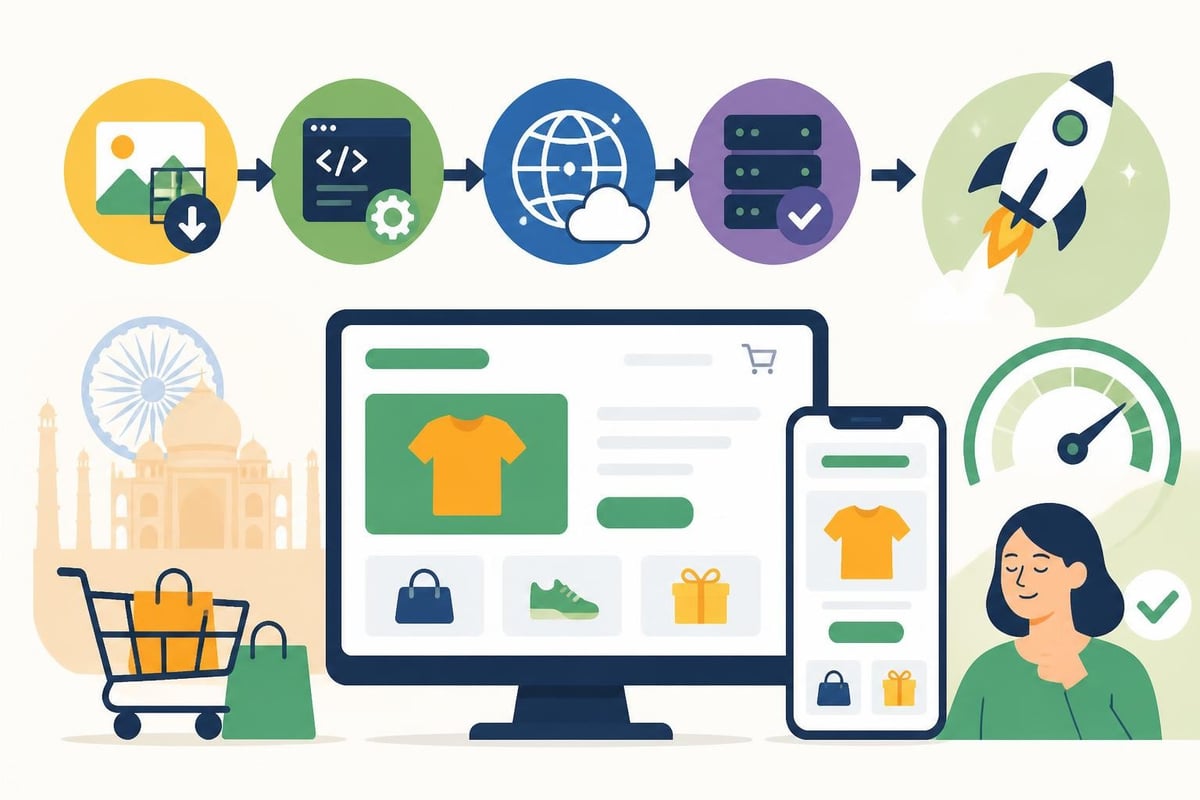
Optimizing ecommerce website design india for performance requires strategic technical implementation. Image compression, lazy loading, and content delivery networks (CDNs) with Indian server locations dramatically improve loading times.
Critical performance optimization techniques include:
- Implementing WebP image formats with fallbacks
- Minimizing HTTP requests through file concatenation
- Enabling browser caching for returning visitors
- Compressing JavaScript and CSS files
- Utilizing progressive web app (PWA) technologies
PWAs bridge the gap between websites and native applications, offering offline functionality and home screen installation without app store downloads. This approach reduces friction for price-sensitive consumers hesitant to download large applications.
For brands seeking to establish robust online presence with optimized performance, Shopify Website Development provides a solid foundation with built-in performance features and scalability options tailored for growing businesses.
Mobile-First Design Imperatives
With mobile commerce accounting for the majority of Indian eCommerce transactions, mobile-first design transcends optional enhancement to become a fundamental requirement. This approach designs for smartphone experiences first, then scales up to tablet and desktop views.
Touch-Optimized Interface Elements
Mobile interfaces demand larger, touch-friendly buttons and adequate spacing between interactive elements. The minimum recommended touch target size is 48×48 pixels to prevent accidental taps and user frustration.
Product galleries must support swipe gestures for image navigation, while filters and sorting options should use bottom sheets or slide-out menus that don't obstruct content. Sticky "Add to Cart" buttons ensure purchase options remain accessible regardless of scroll position.
Simplified Checkout Experiences
Mobile checkout abandonment rates in India exceed 70%, primarily due to lengthy forms and complex processes. Reducing checkout to three screens or fewer significantly improves completion rates.
Guest checkout options remove barriers for first-time buyers, while autofill functionality and OTP-based verification streamline the process for returning customers. Progress indicators provide psychological reassurance during multi-step checkouts.
Payment Integration and Trust Building
Payment preferences in India span traditional cash on delivery, UPI, digital wallets, net banking, and credit cards. Comprehensive payment gateway integration accommodates diverse user preferences without compromising security or user experience.
Security and Trust Signals
SSL certificates, secure payment badges, and clear privacy policies establish credibility. Displaying recognized payment partner logos (Razorpay, PayU, Paytm) leverages existing trust relationships Indian consumers have with these platforms.
| Trust Element | Implementation | Impact on Conversion |
|---|---|---|
| SSL Certificate | HTTPS protocol | 18% increase |
| Customer Reviews | Star ratings, testimonials | 25% increase |
| Return Policy | Clear, accessible | 15% increase |
| Contact Information | Phone, email, address | 12% increase |
| Payment Badges | Verified logos | 20% increase |
Transparent pricing including all taxes and shipping costs prevents cart abandonment at checkout. Hidden charges represent a primary abandonment trigger that damages trust and brand perception.
According to research on eCommerce design impact, page speed and product presentation directly influence conversion rates, making these elements critical investment areas for Indian businesses.
Search Functionality and Product Discovery
Effective search mechanisms help users navigate extensive catalogs efficiently. Advanced search features including filters, faceted navigation, and visual search technology enhance product discovery and reduce time-to-purchase.
Intelligent Search Features
Autocomplete suggestions guide users toward popular products and correct spelling errors. Synonym recognition ensures searches for "mobile" return results tagged as "smartphone." Search analytics reveal user intent and inform inventory and marketing strategies.
Advanced search capabilities for ecommerce website design india:
- Category-specific filters (size, color, brand, price range)
- Sort options (popularity, price, newest, ratings)
- Visual search for fashion and home decor categories
- Voice search optimization for mobile users
- Recent searches and trending products
Faceted navigation allows simultaneous application of multiple filters without page reloads, creating seamless refinement experiences. Each filter selection should display the number of available products to prevent zero-result frustration.

Content Strategy and Product Presentation
Compelling product content drives purchase decisions. High-quality photography, detailed descriptions, size guides, and video demonstrations reduce uncertainty and return rates while building confidence in purchase decisions.
Visual Content Standards
Indian consumers expect multiple product angles, zoom functionality, and lifestyle imagery showing products in context. Video content demonstrating product features or usage increases engagement and time on site.
User-generated content including customer photos and reviews provides social proof that professional photography cannot replicate. Featuring authentic customer experiences builds community and trust.
Descriptive Content Excellence
Product descriptions must balance technical specifications with benefit-focused copy. Bullet points improve scannability for mobile users, while detailed paragraphs serve research-oriented desktop shoppers.
Size charts, material information, care instructions, and compatibility details prevent post-purchase disappointment. FAQ sections addressing common concerns reduce customer service inquiries and support purchase confidence.
Platform Selection and Technical Foundation
Choosing the right eCommerce platform influences long-term scalability, maintenance costs, and design flexibility. SaaS platforms offer reliability and regular updates, while open-source solutions provide greater control at the expense of increased technical complexity.
Shopify for Indian Businesses
Shopify has emerged as a leading choice for Indian eCommerce businesses due to its balance of user-friendliness, robust features, and extensive app ecosystem. The platform handles technical infrastructure, security updates, and payment compliance, allowing businesses to focus on growth.
The platform's theme customization capabilities enable brands to create distinctive shopping experiences without extensive development resources. However, businesses with specific requirements benefit from professional development expertise that optimizes themes for conversion rather than aesthetics alone.
Shopify advantages for ecommerce website design india include:
- Built-in mobile responsiveness across all themes
- Integrated payment processing with Indian gateways
- Multilingual and multi-currency support
- Scalable infrastructure handling traffic spikes
- Comprehensive analytics and reporting tools
Enterprise brands requiring advanced customization, dedicated support, and enhanced functionality find value in Shopify Plus, which offers API flexibility and automation capabilities that streamline operations at scale. Understanding pricing structures helps businesses select appropriate solutions matching their growth stage and budget constraints.
Conversion Rate Optimization Principles
Strategic ecommerce website design india incorporates conversion rate optimization (CRO) from inception rather than as an afterthought. Data-driven design decisions based on user behavior analytics consistently outperform assumption-based approaches.
A/B Testing and Iterative Improvement
Systematic testing of headlines, button colors, layout variations, and checkout flows identifies optimization opportunities. Even minor improvements compound over time, substantially impacting revenue.
Heat mapping and session recording reveal how users actually interact with pages versus intended behaviors. These insights expose usability issues, confusing navigation, and friction points that quantitative analytics alone cannot identify.
| CRO Element | Testing Priority | Potential Impact |
|---|---|---|
| Homepage Hero | High | 12-18% |
| Product Page Layout | High | 15-25% |
| Checkout Flow | Critical | 20-35% |
| Call-to-Action Text | Medium | 8-12% |
| Navigation Structure | Medium | 10-15% |
Personalization engines that display relevant products based on browsing history, location, or previous purchases increase average order values. Dynamic content adapting to user preferences creates individualized experiences that generic designs cannot match.
Accessibility and Inclusive Design
Accessible ecommerce website design india serves broader audiences while improving overall user experience. Compliance with WCAG guidelines ensures people with disabilities can navigate, understand, and interact with online stores effectively.
Practical Accessibility Implementation
Alt text for images aids visually impaired users using screen readers while providing SEO benefits. Proper heading hierarchy (H1, H2, H3) creates logical content structure that assistive technologies interpret correctly.
Essential accessibility considerations include:
- Sufficient color contrast ratios for text readability
- Keyboard navigation for users unable to use mice
- Clear focus indicators on interactive elements
- Descriptive link text explaining destination or action
- Form labels and error messages that screen readers announce
Captions and transcripts for video content serve deaf and hard-of-hearing users while benefiting those in sound-sensitive environments. These inclusive practices expand market reach while demonstrating social responsibility.
Post-Launch Optimization and Maintenance
Launching an eCommerce store marks the beginning rather than conclusion of the design journey. Continuous monitoring, regular updates, and responsive improvements ensure sustained performance and competitiveness.
Ongoing Performance Monitoring
Analytics platforms reveal user behavior patterns, popular products, traffic sources, and conversion funnels. Regular review of these metrics identifies emerging trends and declining performance requiring attention.
Security updates, plugin compatibility checks, and broken link repairs maintain site health. Outdated software creates vulnerabilities that compromise customer data and brand reputation.
Content freshness signals relevance to both users and search engines. Regular blog posts, updated product descriptions, and seasonal landing pages keep sites dynamic and engaging. Integration with broader digital marketing strategies amplifies reach and drives qualified traffic to optimized designs.
Customer feedback collection through surveys, reviews, and support ticket analysis provides qualitative insights complementing quantitative data. Direct user input often reveals improvement opportunities that metrics alone cannot surface.
Regional Customization Strategies
India's linguistic and cultural diversity requires thoughtful localization beyond simple translation. Regional festivals, shopping behaviors, and aesthetic preferences vary significantly across states and communities.
Multi-Language Implementation
Offering content in Hindi, Tamil, Telugu, Bengali, and other regional languages expands addressable markets. Professional translation maintains brand voice while ensuring cultural appropriateness and technical accuracy.
Currency display, date formats, and measurement units should align with Indian standards. Rupee pricing with familiar formatting (₹1,999 rather than Rs. 1999.00) creates familiarity and trust.
Seasonal campaigns acknowledging Diwali, Durga Puja, Onam, and regional harvest festivals demonstrate cultural awareness. Limited-time offers aligned with traditional shopping periods capitalize on heightened purchase intent during these windows.
Successful ecommerce website design india in 2026 requires balancing international design standards with local market understanding, prioritizing mobile experiences, and implementing conversion-focused strategies that transform visitors into customers. Whether you're launching a new online store or optimizing an existing presence, professional expertise makes the difference between generic implementations and high-performing digital storefronts. WebzPlot specializes in creating conversion-optimized Shopify stores tailored for Indian businesses, combining technical excellence with strategic marketing insights to accelerate your eCommerce growth.