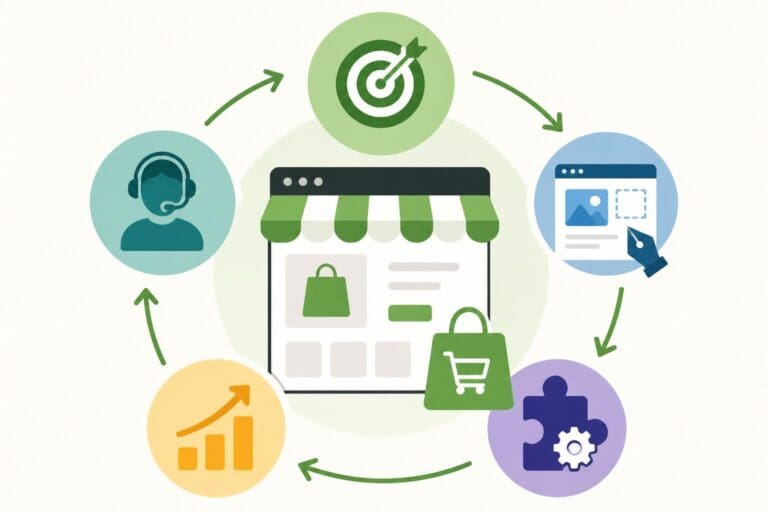
The ecommerce landscape in 2026 demands more than a functional online store. Brands need strategic partners who understand the intersection of technology, design, and marketing. A digital agency for ecommerce serves as this partner, delivering integrated solutions that transform online businesses into revenue-generating machines. These specialized agencies combine technical expertise with data-driven marketing strategies to help brands compete in increasingly crowded digital marketplaces.
Understanding the Role of a Digital Agency for Ecommerce
A digital agency for ecommerce operates differently from traditional web development firms or general marketing agencies. These specialists focus exclusively on the unique challenges facing online retailers, from platform selection and store architecture to conversion optimization and customer acquisition.
Strategic Platform Selection and Development
The foundation of any successful ecommerce business starts with choosing the right platform. While numerous options exist, Shopify has emerged as the preferred platform for D2C brands due to its robust ecosystem, scalability, and merchant-focused features. A specialized digital agency for ecommerce guides this critical decision based on your business model, growth projections, and technical requirements.
Modern ecommerce development extends far beyond template selection. Professional agencies architect stores that balance aesthetic appeal with functional excellence. This includes:
- Mobile-responsive design that delivers seamless experiences across all devices
- Fast loading speeds that reduce bounce rates and improve SEO rankings
- Intuitive navigation structures that guide customers toward purchases
- Secure payment processing that builds trust and protects customer data
- Scalable architecture that grows alongside your business
The development process requires deep understanding of ecommerce-specific needs. Unlike corporate websites, online stores must handle complex product catalogs, inventory management, shipping integrations, and payment gateways while maintaining optimal performance.

Conversion Rate Optimization as a Core Competency
Revenue generation depends on converting visitors into customers. This is where conversion rate optimization (CRO) becomes essential. A digital agency for ecommerce employs systematic approaches to identify friction points and implement improvements that directly impact your bottom line.
Data-Driven CRO Strategies
Professional agencies utilize analytics tools to understand user behavior, identify drop-off points, and test hypotheses. This evidence-based approach eliminates guesswork and focuses resources on changes that deliver measurable results.
| CRO Element | Impact on Conversions | Implementation Priority |
|---|---|---|
| Product page optimization | 15-25% improvement | High |
| Checkout flow simplification | 20-35% improvement | Critical |
| Trust signals and reviews | 10-18% improvement | High |
| Site speed optimization | 12-20% improvement | Critical |
| Mobile experience enhancement | 18-28% improvement | Critical |
Effective CRO involves continuous testing and refinement. A/B testing different layouts, copy variations, call-to-action buttons, and pricing displays reveals what resonates with your specific audience. These insights compound over time, creating significant competitive advantages.
Best practices in ecommerce UX design emphasize user-friendly interfaces and intuitive navigation that remove barriers between browsers and buyers. Every element should guide customers toward completing their purchase with minimal friction.
Performance Marketing for Ecommerce Growth
Building a high-converting store represents only half the equation. Driving qualified traffic requires sophisticated performance marketing strategies tailored to ecommerce objectives. A digital agency for ecommerce understands the nuances of customer acquisition costs, lifetime value calculations, and attribution modeling.
Multi-Channel Customer Acquisition
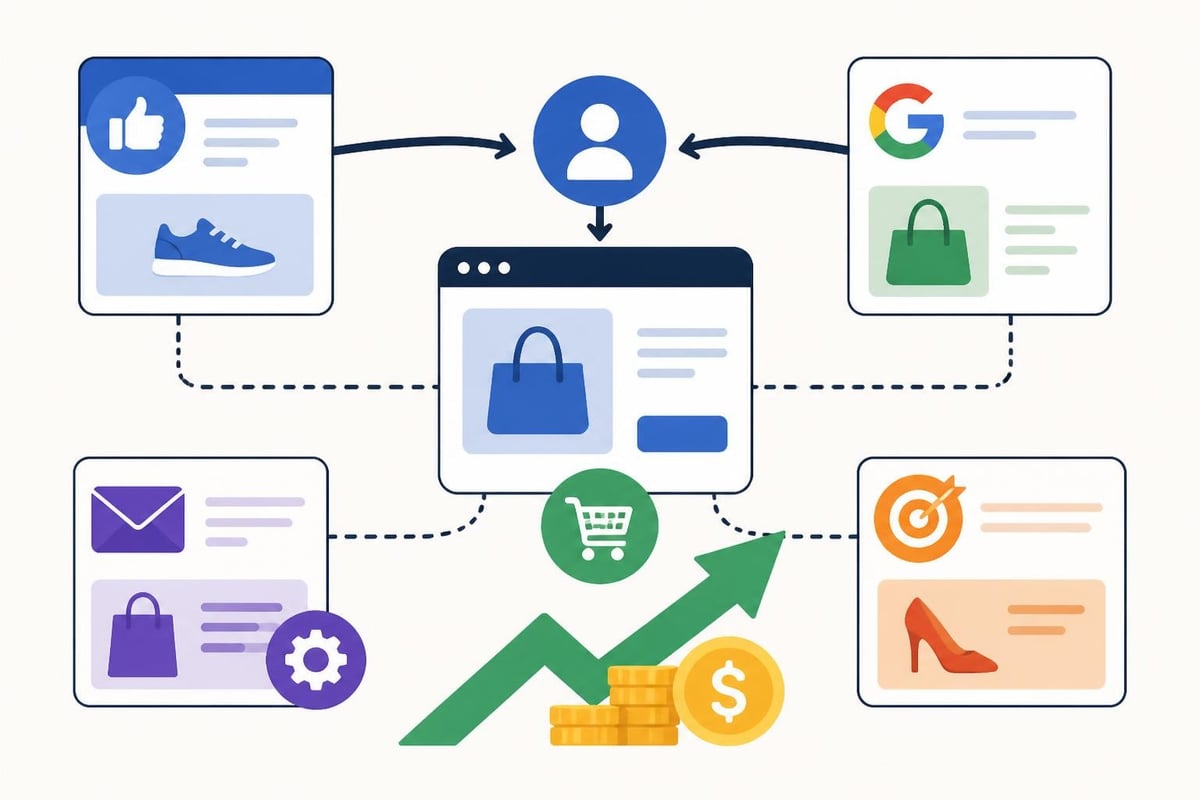
Successful ecommerce brands maintain presence across multiple channels while maintaining consistent messaging and brand identity. Strategic agencies orchestrate campaigns across:
Paid Search Advertising targets high-intent customers actively searching for products. Google Shopping campaigns showcase product images, prices, and ratings directly in search results, capturing customers at the critical decision-making moment.
Social Media Advertising leverages platforms like Meta (Facebook and Instagram) to reach customers based on interests, behaviors, and demographics. Dynamic product ads retarget website visitors with specific products they viewed, dramatically improving conversion rates.
Email Marketing Automation nurtures customer relationships through segmented campaigns. Abandoned cart sequences, post-purchase follow-ups, and personalized product recommendations drive repeat purchases and increase customer lifetime value.
The integration of these channels creates a cohesive customer journey. A digital agency for ecommerce maps this journey, identifying optimal touchpoints and messaging for each stage from awareness through advocacy.
Technical SEO and Organic Growth Strategies
While paid advertising delivers immediate results, organic search provides sustainable long-term traffic. Ecommerce SEO requires specialized knowledge of product page optimization, category architecture, and technical implementation.
Ecommerce-Specific SEO Challenges
Online stores face unique SEO obstacles that demand expert solutions:
- Duplicate content from product variations and filters
- Thin content on category and filter pages
- Site architecture that balances user experience with crawlability
- Page speed despite high-resolution product images
- Schema markup for rich product snippets
Professional agencies implement structured data that helps search engines understand product details, pricing, availability, and reviews. This enhanced information displays in search results, improving click-through rates and attracting qualified traffic.
Many D2C brands choose Shopify specifically for its SEO capabilities, including built-in features that simplify technical optimization while maintaining flexibility for advanced customization.
Building High-Performing Shopify Stores
WebzPlot specializes in creating stores that convert browsers into buyers through strategic development and optimization. Our Shopify Website Development services focus on building foundations for sustainable growth, combining proven design principles with conversion-focused architecture.
The development process begins with understanding your brand positioning, target audience, and competitive landscape. This research informs decisions about site structure, visual design, and functionality prioritization. Rather than applying generic templates, we architect stores around your specific business model and growth objectives.
Enterprise Solutions for Scaling Brands
Established businesses with complex requirements benefit from advanced platform capabilities. Our Shopify Plus Development expertise helps enterprise-level brands leverage enhanced features including:
- Automation capabilities that streamline operations and reduce manual tasks
- Wholesale channel integration for B2B operations alongside D2C sales
- Enhanced API access for complex third-party integrations
- Dedicated infrastructure that handles high-volume traffic without performance degradation
- Advanced customization options that support unique business requirements
These enterprise solutions require deep platform knowledge and technical expertise that typical agencies lack. Understanding the full capabilities and limitations of Shopify Plus ensures brands maximize their platform investment.
Measuring Success Through Analytics and Attribution
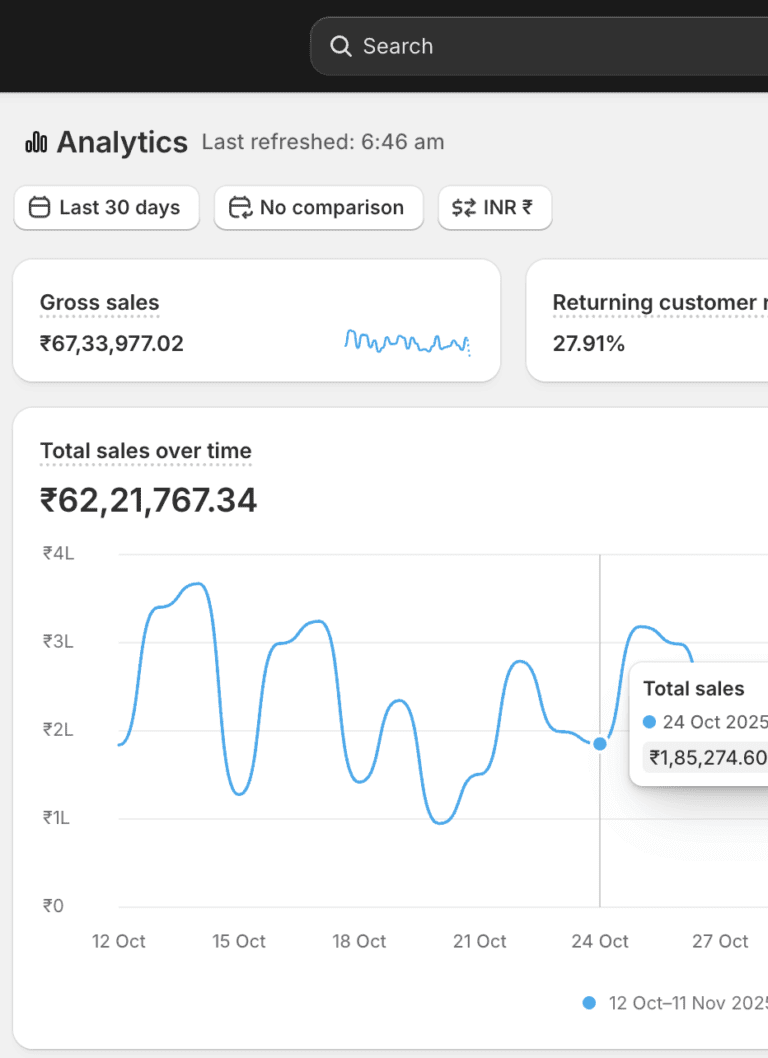
A digital agency for ecommerce establishes clear measurement frameworks that connect marketing activities to revenue outcomes. Sophisticated tracking reveals which channels, campaigns, and touchpoints drive the highest-value customers.
Key Performance Indicators for Ecommerce
Different metrics matter at various business stages. Early-stage brands focus on customer acquisition and initial purchase behavior, while established businesses emphasize retention and lifetime value.
| Business Stage | Primary Metrics | Secondary Metrics |
|---|---|---|
| Launch (0-6 months) | Conversion rate, AOV, CAC | Traffic sources, bounce rate |
| Growth (6-24 months) | Revenue growth, ROAS, repeat rate | Customer segments, email performance |
| Scale (24+ months) | LTV:CAC ratio, retention rate, margin | Channel efficiency, cohort analysis |
Attribution modeling becomes increasingly important as marketing complexity grows. Understanding whether customers convert after first touch, last touch, or multiple interactions informs budget allocation and strategy refinement.
Integrated Marketing and Development Approach
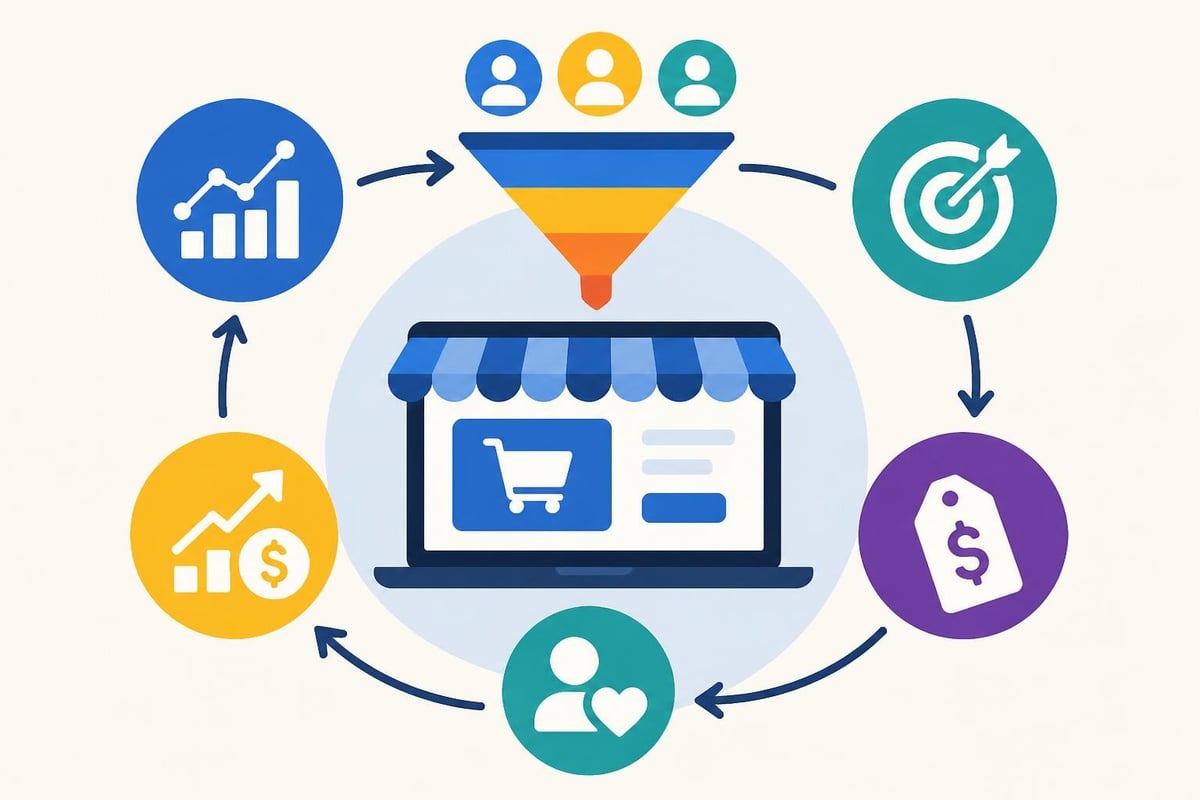
The most successful ecommerce operations eliminate silos between development and marketing teams. A digital agency for ecommerce provides this integration naturally, ensuring technical capabilities support marketing objectives and campaigns leverage platform strengths.
When developers understand marketing goals, they build features that enable campaign execution. When marketers understand technical constraints, they design realistic strategies that deliver results. This alignment accelerates implementation and improves outcomes.
Continuous Optimization Cycles
Digital commerce never reaches a "finished" state. Markets evolve, competitors innovate, and customer expectations increase. Professional agencies establish ongoing optimization rhythms that keep your store competitive:
- Monthly performance reviews analyze metrics and identify improvement opportunities
- Quarterly strategic assessments evaluate market position and adjust tactics
- Continuous A/B testing validates hypotheses and refines user experience
- Regular platform updates maintain security and access new features
- Seasonal preparation ensures infrastructure handles peak traffic periods
This systematic approach compounds improvements over time, creating significant competitive advantages that are difficult for competitors to replicate.
Selecting the Right Digital Agency for Ecommerce
Not all agencies deliver equal value. Evaluating potential partners requires looking beyond portfolio aesthetics to understand their strategic capabilities, technical depth, and results orientation.
Critical Evaluation Criteria
Platform Expertise: Deep knowledge of your chosen platform is non-negotiable. Agencies should demonstrate mastery through certifications, case studies, and technical capabilities that extend beyond basic implementation.
Performance Marketing Results: Request specific ROAS figures, CAC benchmarks, and campaign performance data. Quality agencies provide transparent reporting and realistic projections based on your industry and business model.
CRO Methodology: Understanding how agencies approach optimization reveals their sophistication. Look for structured testing frameworks, statistical rigor, and documented improvement processes.
Communication and Collaboration: Successful partnerships require clear communication, responsive support, and collaborative problem-solving. Assess these factors during initial conversations.
Industry Specialization: Agencies familiar with your product category understand customer behavior, seasonal patterns, and competitive dynamics that generic agencies miss.
The investment in a quality digital agency for ecommerce pays dividends through faster growth, higher profitability, and reduced operational headaches. Cheap solutions often create technical debt and missed opportunities that cost far more to fix than investing properly from the start.
Future-Proofing Your Ecommerce Business
The digital commerce landscape continues evolving rapidly. Successful brands partner with agencies that anticipate trends and prepare for emerging opportunities rather than reacting to market changes.
Emerging Trends Shaping Ecommerce
Artificial Intelligence and Personalization: Machine learning enables hyper-personalized shopping experiences that adapt to individual preferences, browsing patterns, and purchase history. Forward-thinking agencies integrate these capabilities to increase relevance and conversion rates.
Headless Commerce Architecture: Separating frontend presentation from backend commerce functionality enables greater flexibility and faster innovation. This approach supports omnichannel strategies and future platform migrations.
Sustainability and Transparency: Modern consumers demand information about product sourcing, environmental impact, and business practices. Strategic agencies help brands communicate these values authentically through design and content.
Voice and Visual Search: Emerging search modalities require new optimization approaches. Agencies that understand these technologies position clients for early-adopter advantages.
Working with agencies that understand where ecommerce is heading ensures your store remains competitive as markets evolve. This strategic perspective separates commodity providers from true partners in growth.
Maximizing Return on Agency Investment
The relationship with your digital agency for ecommerce should deliver measurable returns that justify the investment. Establishing clear expectations, communication protocols, and success metrics ensures alignment and accountability.
Collaboration Best Practices
Successful client-agency relationships share common characteristics:
- Clear objective definition with quantifiable success metrics
- Regular communication cadence for updates, questions, and strategic discussions
- Transparent data sharing that enables informed decision-making
- Collaborative problem-solving that leverages both parties' expertise
- Long-term perspective that prioritizes sustainable growth over quick wins
Agencies perform best when treated as strategic partners rather than vendors. Sharing business challenges, market insights, and growth aspirations enables them to provide solutions that address root causes rather than symptoms.
The most productive relationships evolve over time as agencies develop deeper understanding of your brand, customers, and competitive position. This institutional knowledge becomes increasingly valuable as it informs strategic recommendations and tactical execution.
Building a successful ecommerce business requires expertise across development, conversion optimization, and performance marketing. The right digital agency for ecommerce brings these capabilities together, delivering integrated solutions that drive measurable revenue growth. WebzPlot combines technical excellence in Shopify development with proven performance marketing strategies to help D2C brands build high-converting stores and scale profitably. Ready to transform your online store into a growth engine? Let's discuss how we can accelerate your ecommerce success.