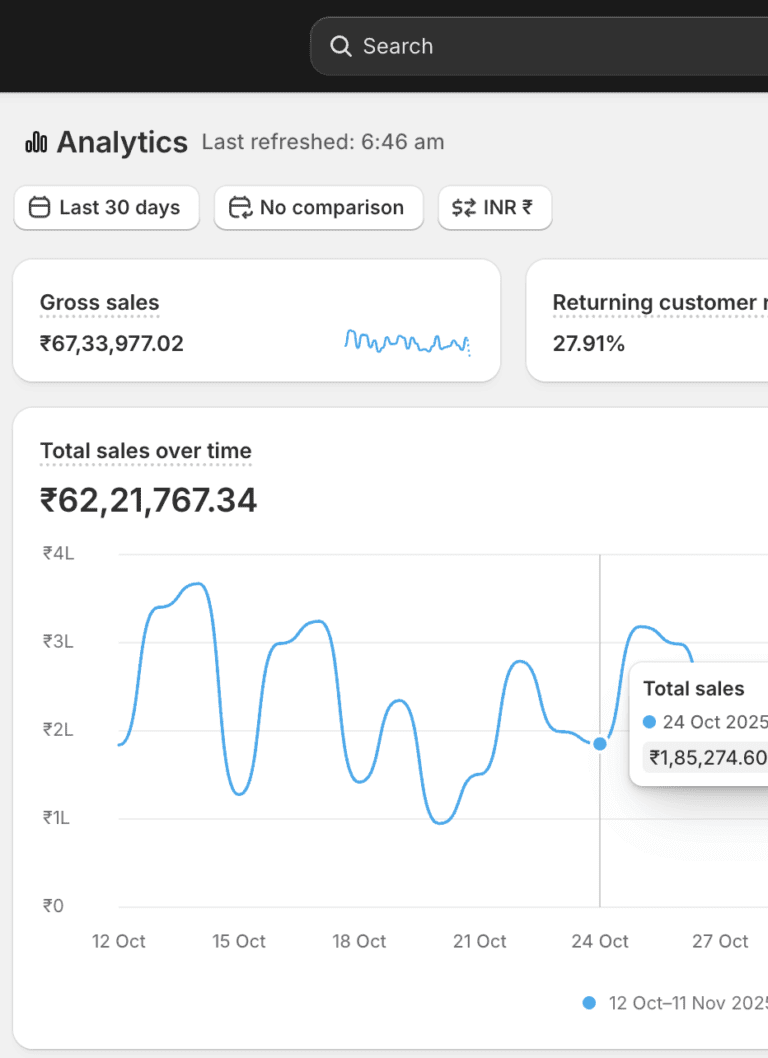
The digital commerce landscape continues to evolve at a rapid pace, making professional ecommerce website design and development more critical than ever for brands looking to establish a profitable online presence. Whether you're launching a new direct-to-consumer brand or scaling an established business, the foundation of your success lies in a strategically designed and expertly developed online store that converts visitors into customers. The difference between mediocre and exceptional results often comes down to thoughtful implementation of proven design principles combined with technical excellence.
Strategic Foundation for Your Online Store
Building a successful ecommerce presence requires more than just selecting a platform and uploading products. The strategic foundation begins with understanding your target audience, defining clear business objectives, and choosing the right technology stack that aligns with your growth trajectory.
Platform Selection Determines Long-Term Success
Choosing the right ecommerce platform represents one of the most consequential decisions in your digital journey. While numerous options exist in 2026, Shopify has emerged as the leading solution for D2C brands due to its balance of flexibility, reliability, and extensive ecosystem. The platform offers different tiers to match various business scales, from startups to enterprise brands.
For established brands processing higher transaction volumes, Shopify Plus Development provides enterprise-level capabilities including advanced automation, dedicated support, and enhanced customization options that support sophisticated business requirements.
Key platform considerations include:
- Scalability to accommodate growth without migration
- Native payment processing capabilities
- App ecosystem and integration options
- Mobile responsiveness and performance
- SEO capabilities and technical infrastructure
- Total cost of ownership including transaction fees
The foundation you build today determines the ceiling for tomorrow's growth potential.

User Experience Design Principles
Effective ecommerce website design and development centers on creating intuitive experiences that guide visitors seamlessly from discovery to purchase. User experience encompasses everything from visual hierarchy to navigation patterns, and getting these elements right dramatically impacts conversion rates.
Clarity Drives Conversion Performance
According to research analyzing thousands of ecommerce stores, clarity represents the single most important design principle for driving sales. Visitors should immediately understand what you sell, why it matters, and how to make a purchase without confusion or friction.
Essential clarity elements include:
- Clear value proposition visible above the fold
- Intuitive navigation with logical category structure
- High-quality product imagery with zoom capabilities
- Scannable product descriptions highlighting key benefits
- Transparent pricing without hidden costs
- Prominent call-to-action buttons with action-oriented copy
Navigation patterns should follow familiar ecommerce conventions rather than attempting to reinvent established patterns. Users arrive with expectations shaped by major retailers, and deviating from these norms creates cognitive friction that increases abandonment rates.
Mobile-First Design Philosophy
With mobile commerce accounting for the majority of online transactions in 2026, mobile-first design has transitioned from optional to mandatory. This approach means designing the mobile experience first, then expanding functionality for larger screens rather than trying to compress desktop layouts.
| Mobile Design Priority | Implementation Strategy | Impact on Conversions |
|---|---|---|
| Touch-friendly elements | Minimum 44px tap targets | Reduces user frustration |
| Simplified navigation | Hamburger menus with clear hierarchy | Improves discoverability |
| Fast loading speed | Optimized images, lazy loading | Decreases bounce rate |
| One-handed operation | Bottom navigation placement | Enhances usability |
| Streamlined checkout | Autofill, digital wallets | Reduces cart abandonment |
The mobile experience should feel native and purposeful, not like a scaled-down version of the desktop site.
Technical Development Excellence
While design captures attention, technical development determines whether that attention converts into revenue. The backend architecture, performance optimization, and technical SEO implementation all contribute to the overall effectiveness of your ecommerce website design and development project.
Performance Optimization Fundamentals
Page speed directly correlates with conversion rates and search rankings. Every second of delay costs real revenue, making performance optimization a critical component of development.
Core performance strategies:
- Image optimization using modern formats like WebP
- Code minification to reduce file sizes
- Content delivery networks for global speed
- Lazy loading for below-fold content
- Browser caching for returning visitors
- Database optimization for query efficiency
Professional development teams implement these optimizations during the build phase rather than attempting to retrofit them later, ensuring optimal performance from launch day.
Security and Trust Signals
Security concerns remain a top barrier to online purchases. Your ecommerce website design and development must incorporate robust security measures and clearly communicate trustworthiness to visitors.
SSL certificates represent the baseline requirement, but comprehensive security extends far beyond encryption. Implementing secure payment gateways, maintaining PCI compliance, protecting customer data, and regularly updating software all contribute to a secure shopping environment.
Visible trust signals including security badges, customer reviews, return policies, and contact information help overcome purchase hesitation and build confidence throughout the buying journey.

Conversion Rate Optimization Strategy
Launching your store represents just the beginning. Continuous optimization based on data and user behavior separates high-performing stores from average ones. Conversion rate optimization should be embedded in your ecommerce website design and development philosophy from day one.
Data-Driven Decision Making
Analytics implementation must happen during development to capture visitor behavior from the first customer. This data reveals how users interact with your store, where they encounter friction, and which elements drive purchases.
Critical metrics to monitor:
- Conversion rate by traffic source
- Average order value trends
- Cart abandonment rate and triggers
- Product page engagement metrics
- Checkout completion funnel
- Customer lifetime value
| Optimization Area | Testing Method | Expected Impact |
|---|---|---|
| Product pages | A/B testing layouts | 10-30% lift |
| Checkout flow | Multivariate testing | 15-25% lift |
| Homepage messaging | Split testing headlines | 5-15% lift |
| Navigation structure | User session analysis | 8-20% lift |
This continuous testing and refinement process transforms good stores into exceptional revenue generators.
Strategic Call-to-Action Placement
Every page should guide visitors toward a specific action, whether adding to cart, signing up for emails, or learning more about products. Strategic placement of calls-to-action throughout the shopping experience creates a natural progression toward purchase.
The most effective ecommerce website design and development projects incorporate multiple conversion opportunities at different stages of the buyer journey, recognizing that not every visitor arrives ready to purchase immediately.
Content Strategy Integration
Product listings represent just one component of successful ecommerce content. A comprehensive content strategy encompasses category pages, educational resources, buying guides, and storytelling elements that build brand affinity while supporting SEO objectives.
SEO-Optimized Product Content
Search visibility drives organic traffic, making SEO integration essential during the ecommerce website design and development process. This includes technical SEO foundations like site architecture and schema markup, combined with compelling product descriptions that serve both search engines and human readers.
Content optimization elements:
- Unique product descriptions avoiding manufacturer copy
- Descriptive, keyword-rich page titles and meta descriptions
- Strategic internal linking between related products
- High-quality images with descriptive alt text
- Customer-generated content including reviews
- FAQ sections addressing common questions
Quality content serves dual purposes of improving search rankings while helping customers make informed purchase decisions.
Brand Storytelling Elements
Modern consumers seek connections with brands beyond transactional relationships. Integrating brand storytelling throughout your ecommerce website design and development creates emotional resonance that differentiates you from competitors.
About pages, mission statements, founder stories, and values-driven messaging all contribute to building brand loyalty that extends beyond individual purchases. This narrative thread should weave consistently through homepage content, product descriptions, and supplementary pages.

Checkout Experience Optimization
The checkout process represents the final and most critical stage of the customer journey. Even minor friction points during checkout result in abandoned carts and lost revenue, making this area worthy of intense focus during ecommerce website design and development.
Reducing Checkout Friction
Streamlined checkout experiences minimize form fields, offer guest checkout options, and integrate popular payment methods including digital wallets. The goal is removing every unnecessary step between cart and confirmation.
Checkout best practices include:
- Progress indicators showing completion status
- Persistent cart visibility throughout checkout
- Multiple payment options including buy-now-pay-later
- Address autocomplete functionality
- Clear shipping costs before checkout begins
- Trust badges reinforcing security
- Easy order modification capabilities
Cart abandonment emails serve as a safety net, but preventing abandonment through excellent design proves far more effective than recovery attempts.
Payment Integration Strategy
Payment processing significantly impacts both conversion rates and operational efficiency. Modern ecommerce website design and development incorporates diverse payment options matching customer preferences while maintaining security standards.
Shopify's native payment processing, Shopify Payments, offers competitive rates and seamless integration, though supporting alternative gateways provides flexibility for specific business requirements or international markets.
Scalability and Growth Planning
Your ecommerce platform should accommodate growth without requiring complete rebuilds. Forward-thinking ecommerce website design and development anticipates future needs including expanded product catalogs, international expansion, and increased traffic volumes.
Infrastructure That Grows With Your Business
Starting with Shopify Website Development provides a solid foundation that scales seamlessly as your business grows. The platform handles traffic spikes during promotional periods, accommodates product catalog expansion, and supports business complexity increases without performance degradation.
Planning for growth means:
- Selecting apps and integrations with scalability track records
- Building modular design systems that expand efficiently
- Implementing proper taxonomy for large catalogs
- Establishing processes for content management at scale
- Considering international expansion requirements early
The architecture decisions made during initial development either enable or constrain future growth trajectories.
Integration Ecosystem Development
Modern ecommerce operations require connections between multiple systems including inventory management, customer relationship management, email marketing, and analytics platforms. Your ecommerce website design and development should facilitate these integrations through API capabilities and middleware solutions.
| Integration Type | Business Function | Impact Area |
|---|---|---|
| Inventory management | Real-time stock tracking | Operations efficiency |
| Email marketing | Customer retention | Lifetime value |
| Analytics platforms | Performance insights | Decision making |
| Customer service | Support ticket management | Customer satisfaction |
| Accounting software | Financial tracking | Business intelligence |
A well-integrated technology stack eliminates manual data entry, reduces errors, and provides comprehensive visibility across all business functions.
Accessibility and Inclusive Design
Inclusive ecommerce website design and development ensures your store serves all potential customers regardless of abilities or disabilities. Beyond being ethically important, accessibility expands your addressable market and often correlates with improved overall user experience.
WCAG Compliance Standards
Web Content Accessibility Guidelines provide the framework for creating accessible digital experiences. Key considerations include proper heading hierarchy, keyboard navigation support, sufficient color contrast, screen reader compatibility, and alternative text for images.
Accessibility implementation checklist:
- Semantic HTML markup for screen readers
- Keyboard-only navigation functionality
- Color contrast ratios meeting WCAG AA standards
- Form labels and error messaging clarity
- Video captions and transcripts
- Resizable text without breaking layouts
These accommodations benefit all users, not just those with specific accessibility needs, by creating clearer, more intuitive interfaces.
Maintenance and Continuous Improvement
Launching your store marks the beginning of an ongoing optimization journey. Regular maintenance, security updates, feature additions, and performance refinements keep your ecommerce website design and development investment performing at peak levels.
Ongoing Optimization Framework
Successful ecommerce operations establish regular review cycles examining performance metrics, customer feedback, competitive landscape changes, and emerging technologies. This systematic approach to improvement prevents stagnation and maintains competitive advantages.
Working with experienced partners like WebzPlot ensures your store receives continuous attention from specialists focused on conversion optimization and technical excellence. Their expertise in creating high-converting, CRO-optimized Shopify stores means your platform evolves alongside industry best practices and consumer expectations.
Quarterly audits should assess:
- Site speed and technical performance
- Conversion funnel efficiency
- Mobile experience quality
- SEO rankings and organic visibility
- Security vulnerabilities
- Customer journey friction points
This proactive approach identifies opportunities before they become problems, maintaining the momentum of your digital growth trajectory.
Effective ecommerce website design and development combines strategic planning, technical excellence, and continuous optimization to create online stores that consistently convert visitors into customers. The investment in professional development pays dividends through improved user experiences, higher conversion rates, and sustainable business growth. WebzPlot specializes in building high-converting, CRO-optimized Shopify stores that transform digital commerce visions into profitable realities, providing both the technical expertise and strategic guidance needed to succeed in today's competitive landscape.